Three Arian Horns: The Danger of Confirmation Bias in Prophetic History
In the age of social media, memes and “factoids” spread like wildfire. Often, we are quick to share information simply because it supports what we already believe—a psychological phenomenon known as confirmation bias. But when it comes to Bible prophecy and history, accuracy matters more than a convenient narrative.
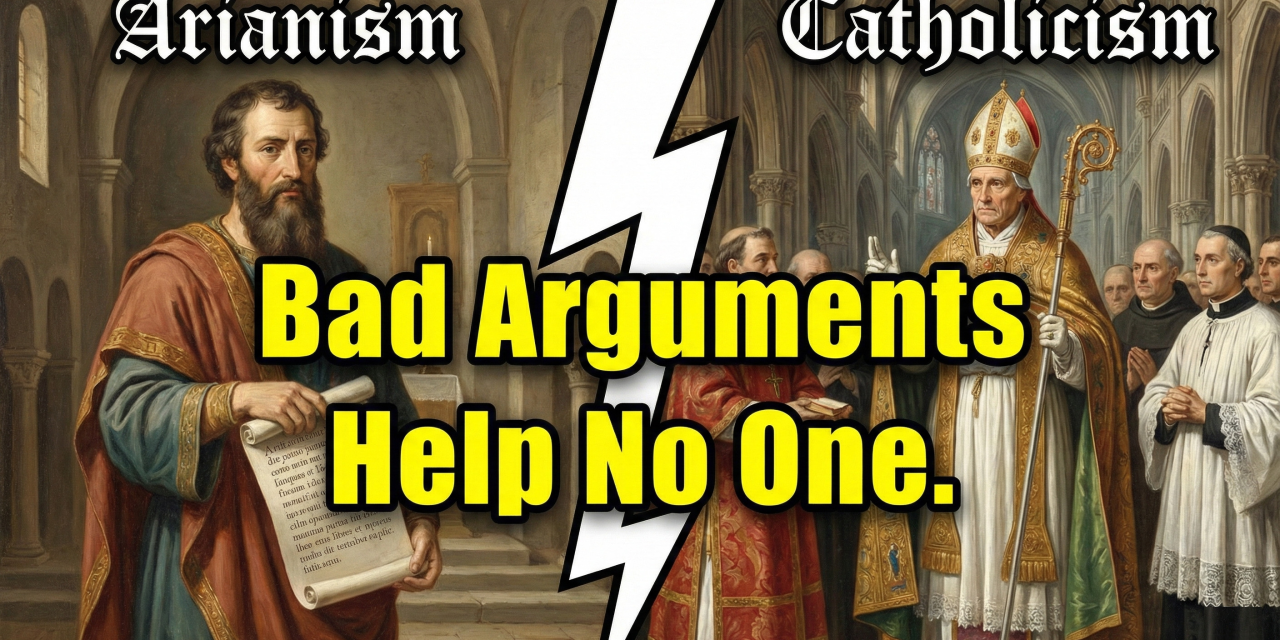
A recent meme circulating in non-Trinitarian circles claims that “Arian believers were completely wiped out by the Catholic Church in 538 A.D.” While this fits a dramatic narrative about the Little Horn power of Daniel 7, does it fit the actual history?
The Historical Reality As explored in our latest video, the history of the “Ten Horns” (the Germanic tribes) is far more nuanced than a Facebook meme suggests.
-
There Were More Than Three Arian Tribes: While Daniel 7 speaks of three horns being “plucked up,” there were actually seven tribes that held to Arianism, including the Visigoths, Burgundians, and Lombards. The “plucking up” referred to the three that specifically blocked the political rise of the Papacy in Italy.
-
It Wasn’t Instant Extermination: The Ostrogoths (the third horn) were driven out of the city of Rome in 538 A.D., marking a key prophetic turning point, but they were not “completely wiped out” as a people until 553 A.D. Furthermore, the Lombards remained Arian until nearly 700 A.D.
-
Arian vs. Arian: History records that the first horn, the Heruli, was actually uprooted by the Ostrogoths—another Arian tribe—acting under the permission of the Eastern Emperor.
Why Accuracy Matters Using bad history to support good theology only weakens our witness. We do not need to revise history to make the prophecies of Daniel fit; they fit perfectly when we study the actual details.
As seekers of truth, we must be willing to vet our sources and reject error, even when it comes from our own “camp.” Truth doesn’t need the help of a lie.