The Gospel Hidden in the Ten Commandments
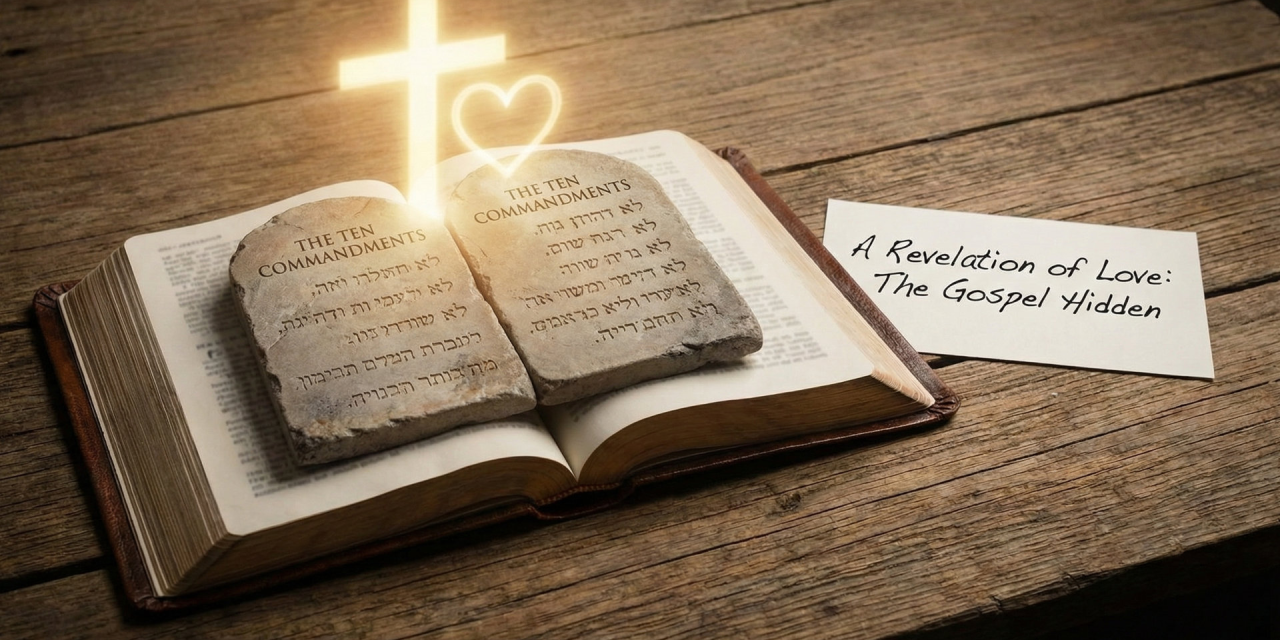
Have you ever considered that the Ten Commandments might be more than just a list of rules? That within these ancient words carved in stone lies the most beautiful love story ever told?
Most Christians today find themselves in a curious contradiction. They’ll protest loudly when the Ten Commandments are removed from a courtroom, yet in the same breath claim these commandments have been “done away with.” We pick and choose—murder, stealing, and lying are still wrong, of course, but that fourth one about the Sabbath? Well, that’s Old Testament.
But what if we’ve been missing something profound all along?
A Revelation of Love
The Ten Commandments don’t begin with a prohibition. They begin with a declaration of love and liberation: “I am the Lord thy God, which brought thee out of the land of Egypt, out of the house of bondage.”
This isn’t just ancient history about the Israelites. When Matthew’s Gospel quotes Hosea’s prophecy—”Out of Egypt I have called my son”—it applies this exodus language to Jesus himself. And if it applies to Israel and to Jesus, it applies to every adopted son and daughter of God.
Have you been called out of Egypt? Out of your own house of bondage? Whatever enslaved you before Christ found you—whether addiction, materialism, broken relationships, or simply the bondage of self—God called you out because He loved you. “When Israel was a child, then I loved him, and called my son out of Egypt.”
The first commandment starts with this revelation: God loves you. That’s why He rescued you. And because He loves you and has freed you, “Thou shalt have no other gods before me.”
The Image We Cannot Make
The second commandment forbids making graven images. But why? Ancient peoples didn’t actually believe their stone idols were gods themselves—they understood these were representations of invisible deities. The human heart craves something visible, something tangible to worship.
Here’s the beautiful truth: We don’t need to make an image of God because God has already given us His perfect image—Jesus Christ.
“Who being the brightness of his glory, and the express image of his person…” Christ is the visible representation of the invisible Father. When we worship Jesus, we worship the Father who sent Him. The Father receives worship through His Son, who perfectly reflects His character.
This isn’t about confusing two persons into one. It’s about understanding that the Son perfectly reveals the Father’s character of love. As Jesus said to Philip, “He that hath seen me hath seen the Father.”
The Name Written on Our Hearts
The third commandment warns us not to take God’s name in vain. We often reduce this to avoiding curse words, but it goes much deeper. In Scripture, a name represents character.
God’s character—revealed in the Father, perfectly displayed in the Son—is now offered to us through the Holy Spirit. “But we all, with open face beholding as in a glass the glory of the Lord, are changed into that same image from glory to glory, even as by the Spirit of the Lord.”
This is the gospel in action: As we behold the Father in Jesus Christ, we are transformed into that same character by the Spirit. We take on His name—His character of love.
To claim the name “Christian” while living contrary to Christ’s character is to take His name in vain. But when we genuinely receive His character through the Spirit, we bear His name authentically.
The Sabbath as Sacred Demonstration
Only after experiencing the first three commandments can we truly keep the fourth: “Remember the Sabbath day, to keep it holy.”
How can an unholy person keep a day holy? We must first be made holy—transformed into Christ’s image—before we can honor the Sabbath as God intended.
The Sabbath commemorates creation: “For in six days the Lord made heaven and earth, the sea, and all that in them is.” But God’s creative work isn’t limited to the world around us. His most important creative act is recreating the human heart.
“For in Christ Jesus neither circumcision availeth any thing, nor uncircumcision, but a new creature.” Through Jesus Christ, the Father recreates us, transforming our entire being from the inside out.
The Sabbath, then, is an outward demonstration of an inward reality—that we worship the true God who has recreated our hearts. Without the genuine experience of transformation, Sabbath-keeping becomes empty ritualism. No amount of Sabbath observance will save us unless Christ abides within.
Love Flowing Through Us
The first four commandments focus on our relationship with God. The remaining six—honoring parents, not killing, not committing adultery, not stealing, not lying, not coveting—govern our relationships with others.
Jesus summarized it perfectly: Love God with all your heart, and love your neighbor as yourself.
But here’s a critical insight: We cannot truly love our neighbor until we first understand and receive God’s love. The commandments aren’t random; they follow a divine sequence. The love of the Father, expressed through the Son, received by the Spirit, flows through us to others.
This is the current of love running through all ten commandments. It originates with the Father, is perfectly revealed in the Son, is implanted in our hearts by the Spirit, and flows out to bless those around us.
We don’t need to “love ourselves first” before loving others, as popular psychology suggests. We need to know and love God first. When we understand how deeply the Father loves us—so much that He gave His only Son—we are filled with a love that naturally overflows to others.
The Remnant Who Keep the Commandments
At the end of time, Satan will be enraged with one group of people: “The dragon was wroth with the woman, and went to make war with the remnant of her seed, which keep the commandments of God, and have the testimony of Jesus Christ.”
These final believers won’t just outwardly observe commandments. They will have experienced the full gospel reality behind them—the Father’s love, the Son’s perfect revelation, the Spirit’s transforming power, and love flowing through them to a watching world.
In the darkest hour, when Satan attempts to cut believers off from the source of divine love, this remnant will continue reflecting the character of the Father and Son to the world.
The Promise in Every Commandment
The Ten Commandments aren’t ultimately about restriction—they’re about relationship. Each commandment is a promise of what God wants to do in us and through us.
The gospel isn’t just about fire insurance for the afterlife. It’s about transformation today. It’s about receiving the character of Christ right now and reflecting that character to everyone we meet.
What is God doing for you today? Not what did He do twenty years ago when you first accepted Christ, but what is He doing in your heart right now?
This is the gospel hidden in plain sight within the Ten Commandments—a love story from beginning to end, from the Father who calls us out of bondage to the neighbors we’re empowered to love. May we experience this reality in the most practical, life-changing way.
Explicitly Mentioned Scripture References:
- Revelation 12:17 – The dragon was wroth with the woman and went to make war with the remnant
- Revelation 14:12 – Here is the patience of the saints; here are they that keep the commandments of God and the faith of Jesus
- Exodus 20:1-17 – The Ten Commandments (read in full)
- Matthew 22:37-40 – Love the Lord thy God with all thy heart, soul, and mind; love thy neighbor as thyself
- Matthew 2:13-15 – Out of Egypt I have called my son
- Galatians 4:4-5 – God sent forth His Son to redeem them under the law, that we might receive adoption of sons
- 1 John 3:1 – Behold what manner of love the Father has given to us that we should be called the sons of God
- Hosea 11:1 – When Israel was a child, then I loved him and called my son out of Egypt
- John 4:23 – True worshipers shall worship the Father in spirit and truth
- Revelation 5:13 – Blessing and honor and glory and power be unto him that sitteth upon the throne and unto the Lamb
- Ephesians 4:6 – One God and Father of all who is above all
- 1 Corinthians 15:28 – The Son shall be subject unto him that put all things under him
- John 14:9 – He that hath seen me hath seen the Father (paraphrased as “Have I been so long with you…”)
- Ephesians 3:9 – The Father of our Lord Jesus Christ, of whom the family in heaven and earth is named
- 2 Corinthians 3:18 – We all with open face beholding as in a glass the glory of the Lord are changed into that same image
- Colossians 1:15 – Who is the image of God (alluded to)
- Hebrews 1:3 – The brightness of his glory, the express image
- Ephesians 3:9 – God who created all things by Christ Jesus
- 2 Peter 3:10 – This world is going to be destroyed
- Galatians 6:15-16 – In Jesus Christ neither circumcision availeth anything, nor uncircumcision, but a new creature
- Mark 2:27 – The Sabbath was made for man and not man for the Sabbath
- 1 John 4:19 – We love Him because He first loved us
- 1 John 4:8-9 – God is love; God sent his only begotten son into the world that we might live through him
Additional Relevant Verses for Main Themes:
Based on the sermon’s themes, these verses are relevant though not explicitly cited:
- Romans 13:8-10 – Love is the fulfillment of the law
- James 2:10-12 – Keeping the whole law
- Psalm 119:97-105 – Love for God’s law and commandments
- Ezekiel 36:26-27 – A new heart and God’s Spirit enabling obedience
- Jeremiah 31:33 – God’s law written on hearts (New Covenant)
- Romans 8:3-4 – The law fulfilled in those who walk according to the Spirit
- John 15:9-10 – Abiding in Christ’s love by keeping His commandments
- 2 Corinthians 5:17 – New creation in Christ
- Colossians 3:10 – Put on the new man, renewed in the image of the Creator
How does understanding God’s love as the foundation of the first commandment change your perspective on obedience to His law?
In what ways does Jesus Christ serve as the perfect image of the Father, and how does beholding that image transform our character?
What does it mean practically to ‘take the name of the Lord in vain’ when we understand ‘name’ as representing God’s character?
Why is it essential to experience the transformation of the first three commandments before we can truly keep the Sabbath holy?
How does the concept of being ‘called out of Egypt’ apply to your personal spiritual journey and freedom from bondage?
What is the relationship between Sabbath-keeping and having Christ’s character formed within us through the Holy Spirit?
How does recognizing the Father as the source of all love and authority affect your worship of both the Father and the Son?
In what ways can professing Christians ‘take God’s name in vain’ by claiming to follow Him while not reflecting His character?
How does understanding the Ten Commandments as a flow of love from the Father through the Son to us and then to others reshape your view of Christian living?
What does it mean that the remnant people at the end of time will both keep the commandments of God and have the faith of Jesus?