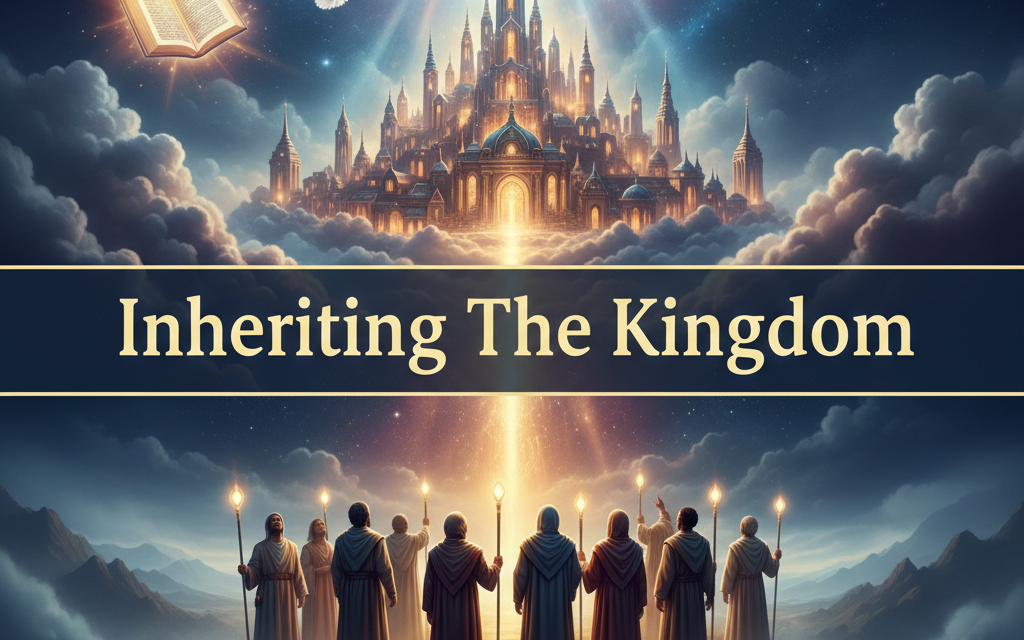
Inheriting the Kingdom: The Character of God’s Children
This powerful exploration of 1 Corinthians 6 challenges us to reconsider what it truly means to inherit the kingdom of God. We often focus on the list of sins—fornication, idolatry, adultery—and think, ‘Well, I don’t do those things, so I’m good.’ But we’re missing the fundamental point: inheritance isn’t about a checklist of behaviors we avoid. It’s about being children of God. Just as a child inherits from their parent not because of what they do but because of who they are, we inherit God’s kingdom through our relationship with Him, not our rule-keeping. The passage reveals something profound about behaviors like covetousness and being a ‘reviler’—one who engages in mean-spirited verbal assaults. These sins might seem less obvious than sexual immorality, yet they’re equally disqualifying. We live in a culture that celebrates reviling, from political discourse to social media wars, even among professed Christians. The attention economy rewards those who rail against others most loudly. But Scripture is clear: such behavior reveals we haven’t truly been transformed. The beautiful truth comes in verse 11: ‘And such were some of you.’ There’s hope for transformation. We can be washed, sanctified, and justified—adopted as God’s children and set on a journey of maturity that mirrors Christ Himself.
Key Points:
- Inheritance requires being a child of the king; we must be born again to become children of God and inherit His kingdom
- The sins listed in 1 Corinthians 6 reveal the character of those who are not God’s children, not just a behavioral checklist
- Covetousness permeates society through advertising and materialism, even among seemingly non-worldly groups
- Theft includes both taking by force and by deception/stealth; Judas exemplified a thief within the church
- Many enter the church without true conversion, climbing in “another way” rather than through the door of Christ
- Reviling (mean-spirited verbal assault) characterizes much of modern discourse, including among professed Christians on social media and in politics
- The attention economy incentivizes reviling behavior for economic gain
- Justification is God’s declaration making sinners His adopted sons and daughters
- Sanctification is the maturing process of growing from spiritual infancy into the fullness of Christ’s character
- Both newborn and mature Christians are equally sons and daughters, though at different stages of spiritual development
Scripture References from the Sermon
Explicitly Mentioned References:
- 1 Corinthians 6:9-10 – Main text about inheriting the kingdom and list of sins
- John 12:4-6 – Judas Iscariot as a thief with the money bag
- John 10:1 – Jesus speaking about entering the sheepfold through the door
- John 3 – Being born again (referenced but not quoted directly)
- Genesis 2 – God sanctifying the seventh day Sabbath
- Galatians 4:4-6 – Adoption as sons, redemption, and receiving the Spirit
- Ephesians 4:13-15 – Growing to the measure of the stature of Christ
- Revelation – The 12 gates and 12 tribes (referenced generally)
Alluded to or Contextually Referenced:
- Ephesians 5:26 – Being washed by the water of the Word (mentioned in discussion)
- 1 Corinthians 6:11 – “Such were some of you, but you are washed, sanctified, justified”
Relevant Verses for Main Themes Discussed:
On Inheritance and Sonship:
- Romans 8:14-17 – Children of God and heirs with Christ
- Galatians 3:26-29 – Sons of God through faith, heirs according to promise
- 1 John 3:1-2 – Called children of God
On Being Born Again:
- John 3:3-7 – Must be born again to see/enter the kingdom
- 2 Corinthians 5:17 – New creation in Christ
On Sanctification and Growth:
- Philippians 2:12-13 – Working out salvation
- 2 Peter 3:18 – Growing in grace and knowledge
- Hebrews 5:12-14 – Moving from milk to solid food
On Covetousness:
- Exodus 20:17 – Tenth commandment against coveting
- Luke 12:15 – Warning against covetousness