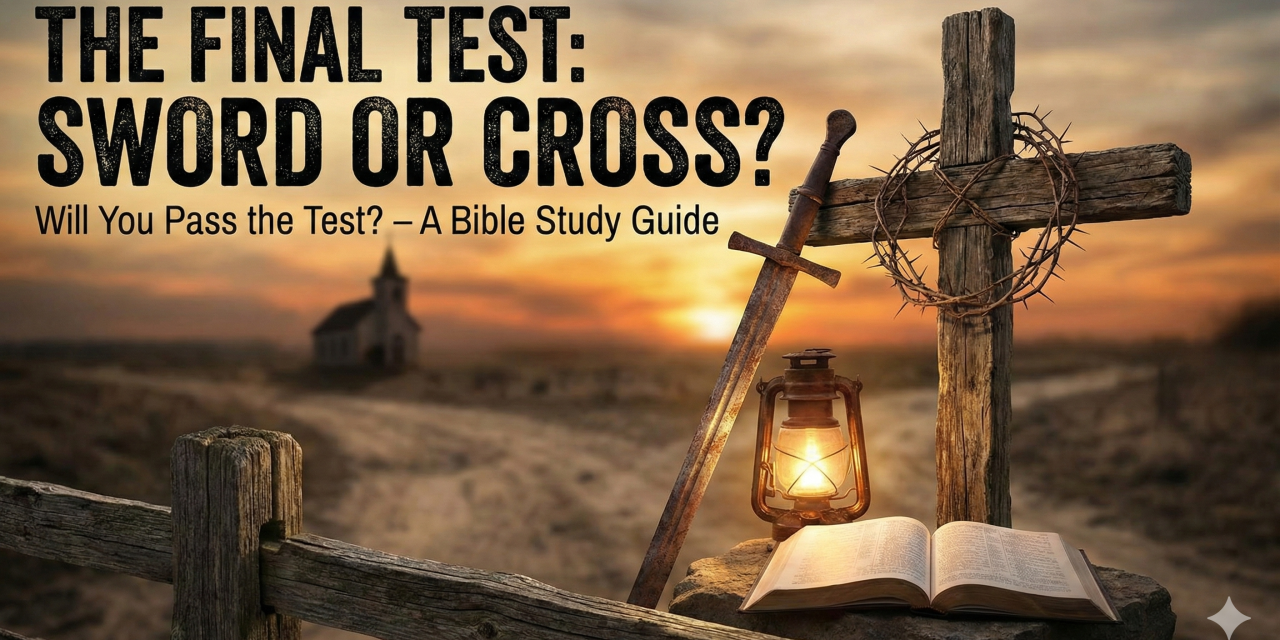
THE FINAL TEST: Sword or Cross?
INTRODUCTION: We often think of the “Final Crisis” as a political or military battle—a clash of swords and laws. But the Bible reveals that the final test for God’s people will mirror the final test of Christ. As Jesus entered the Garden of Gethsemane, He was preparing for a cross, while His disciples were preparing for a throne.
Are we making the same mistake today? Are we sharpening our swords for a debate while Jesus is calling us to die to self? In this study, we will uncover the true nature of the test that determines our eternal destiny.
I. THE DARKEST HOUR
1. What happened immediately after Judas received the “sop” and left the upper room?
John 13:30 — “He then having received the sop went immediately out: and it was night.”
Answer: It was night. This represents the moral darkness of the hour. Judas received the “sop”—a gesture of honor and affection from Jesus—but he rejected the love that came with it. He took the bread but refused the message.
2. When did Jesus say He was “Glorified”?
John 13:31 — “Therefore when he was gone out, Jesus said, Now is the Son of man glorified, and God is glorified in him.”
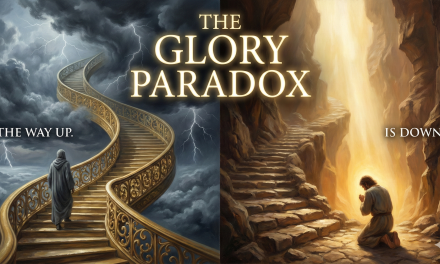
Answer: Jesus didn’t wait for the resurrection to claim glory. He said “Now”—at the moment of betrayal and impending death—was the time of His glory. True glory is not found in earthly victory, but in self-sacrificing love during the darkest trial.
3. What was the burden of Jesus’ prayer in John 17?
John 17:1 — “Father, the hour is come; glorify thy Son, that thy Son also may glorify thee.”
Answer: Jesus prayed that the Father would be glorified in Him. The cross was not just about saving man; it was about clearing the Father’s name and revealing His character to the universe.
II. THE SLEEPING CHURCH
4. What warning did Jesus give His disciples in the Garden?
Luke 22:40 — “Pray that ye enter not into temptation.”
Answer: Jesus wasn’t telling them to pray that the trial wouldn’t happen, but that they wouldn’t enter into the temptation—that is, the temptation to save themselves when the pressure hit.
5. Why were the disciples unprepared for the crisis?
Luke 22:24 — “And there was also a strife among them, which of them should be accounted the greatest.”
Answer: Just hours before the crucifixion, the disciples were arguing about who was the greatest. They entered the garden with hearts full of pride and self-seeking. You cannot prepare for a cross when you are fighting for a throne.
6. What was Peter’s fatal mistake?
Matthew 26:33, 35 — “Though all men shall be offended… yet will I never be offended… Though I should die with thee, yet will I not deny thee.”
Answer: Self-Confidence. Peter and the disciples trusted in their own loyalty and strength. They thought they were ready to die for Jesus, but they didn’t know their own hearts.
7. What do the sleeping disciples represent?
Testimonies, Vol 2, p. 205: “By these sleeping disciples is represented a sleeping church when the day of God’s visitation is nigh.”
Answer: The disciples fell asleep because they did not realize the magnitude of the crisis. Today, the church is asleep, dreaming of being “great,” while the final test approaches.
8. How did James and John misunderstand the kingdom?
Matthew 20:21-22 — “Grant that these my two sons may sit, the one on thy right hand, and the other on the left…”
Answer: They wanted the position, but they didn’t understand the price. Jesus asked, “Are ye able to drink of the cup?” They said, “We are able.” They didn’t realize that the “right hand” and “left hand” of Jesus that day would be occupied by two thieves on crosses.
III. THE FOUR-FOLD TEMPTATION
9. What was the specific temptation leveled at Jesus on the cross?
Mark 15:30 — “Save thyself, and come down from the cross.”
Answer: This was the core test. The devil didn’t tempt Him to commit adultery or steal; he tempted Him to Save Himself. Self-preservation is the strongest human instinct.
10. Who was the FIRST group to tempt Him?
Mark 15:29 — “And they that passed by railed on him… saying… Save thyself.”
Answer: The general public (the passersby) mocked Him. It is hard to stand for truth when the majority is walking by and mocking your sacrifice.
11. Who was the SECOND group to tempt Him?
Luke 23:36-37 — “And the soldiers also mocked him… saying, If thou be the king of the Jews, save thyself.”
Answer: The government/military power tempted Him. They had the power to release Him, but they used their power to mock Him.
12. Who was the THIRD group to tempt Him?
Luke 23:39 — “And one of the malefactors [thief] which were hanged railed on him, saying, If thou be Christ, save thyself and us.”
Answer: Even the criminal dying next to Him tempted Him. The unrepentant thief only wanted salvation from the pain, not salvation from sin.
13. Who was the FOURTH group to tempt Him?
Matthew 27:41-42 — “Likewise also the chief priests mocking him, with the scribes and elders, said… He saved others; himself he cannot save.”
Answer: The religious leaders spoke a profound truth without realizing it. “He saved others; himself he cannot save.” It was true! If He saved Himself, He could not save us. He had to choose between His life and ours.
IV. THE SWORD OR THE CROSS
14. How did Peter react when the mob came?
John 18:10 — “Then Simon Peter having a sword drew it, and smote the high priest’s servant…”
Answer: Peter chose the sword. Many Christians today prefer the sword (debate, argument, fighting for rights) over the cross (suffering, self-denial). But the sword is a weapon of self-preservation; the cross is an instrument of death.
15. What was Jesus’ response to the mob?
John 18:4-5 — “Jesus therefore, knowing all things that should come upon him, went forth… and said unto them, I am he.”
Answer: Jesus didn’t run. He didn’t fight. He surrendered to the will of the Father. He had already won the victory in Gethsemane when He said, “Not my will, but thine be done.”
16. Why is silence often the greatest test?
Matthew 27:14 — “And he answered him to never a word; insomuch that the governor marveled greatly.”
Answer: Jesus refused to plead His case or save Himself through words. The final test will not be won by our arguments, but by our character.
17. What is the “Final Test” for the Remnant?
Revelation 12:11 — “And they overcame him by the blood of the Lamb… and they loved not their lives unto the death.”
Answer: We often think the final test is just about the Sabbath day. While the Sabbath is the issue, the test is whether we love God more than our own lives. Will we choose self-preservation (receiving the Mark of the Beast to buy and sell), or self-sacrifice?
18. Who is the only one who can stand in the end?
Galatians 2:20 — “I am crucified with Christ: nevertheless I live; yet not I, but Christ liveth in me…”
Answer: Only the “dead” can stand. If you are already dead to self, the devil has nothing to tempt you with. You cannot threaten a dead man with death.
Your Decision
Jesus refused to come down from the cross so that He could lift you up to heaven. He chose to die so you could live.
Will you put away the “sword” of self-defense and pride, and take up your cross to follow Him?
Discussion Questions
-
Jesus defined “glory” as His sacrifice, while the world defines it as success. How does this challenge the way we view our own achievements?
-
Judas was close to Jesus and held a position of trust, yet was lost. What does this teach us about the difference between knowing the truth and receiving the love of the truth?
-
The disciples fell asleep because they were overconfident and distracted. In what specific ways might the modern church be “sleeping” through the current crisis?
-
Peter used a sword to fight, while Jesus used a cross. In what ways do we still try to use “swords” (arguments, defensiveness) to fight spiritual battles today?
-
The core temptation Jesus faced on the cross was “Save Yourself.” Why is the instinct of self-preservation often the enemy of God’s will?
-
The Pharisees mocked Jesus saying, “He saved others; himself he cannot save.” Why is it impossible to save yourself and serve others at the same time?
-
The disciples misinterpreted prophecy to mean earthly power rather than sacrifice. How might we be making the same mistake with end-time prophecies today?
-
Jesus won the victory through silence in the face of accusation. Why is silence often harder than speaking up, and what character does it require?
-
Galatians 2:20 speaks of being “crucified with Christ.” What does “dying to self” look like in a practical scenario for you this week?
-
You cannot pass the final test without first winning the victory in prayer. What is one area of your life where you need to pray “Not my will, but Yours be done”?