The Trinity Doctrine: A Biblical Examination of God’s Identity and the Ecumenical Movement
This video provides a critical examination of the Trinity doctrine, arguing that neither the term nor the concept is found in Scripture. The various speakers trace the doctrine’s origins to the Council of Nicaea in 325 AD under Emperor Constantine, presenting it as a philosophical construct rooted in pagan traditions rather than biblical revelation. The message emphasizes that understanding God’s true identity—the Father as the one true God and Jesus Christ as His literal Son—is essential for proper worship and eternal life. The speakers warns that the Trinity doctrine serves as the cornerstone of modern ecumenical movements that unite Christianity with Rome, and that the final battle over worship in the last days requires believers to know whom they worship. The video calls for personal Bible study independent of church traditions, creeds, and denominational teachings, positioning this understanding as crucial for receiving the seal of God rather than the mark of the beast.
Key Points:
- The word “Trinity” and the concept of three persons in one God are not found in the Bible
- The Trinity doctrine originated from the Council of Nicaea (325 AD) and subsequent councils, not from Scripture
- The doctrine is admitted by theologians to be a mystery that contradicts human reason
- Various interpretations exist: Trinitarianism (three persons in one being), Tritheism (three separate beings), and Binitarianism (two persons)
- The doctrine has pagan origins traceable to ancient Babylonian, Egyptian, and Roman religions
- Those who rejected the Trinity (Arian believers) were persecuted and eliminated by Rome
- The Sunday law (321 AD) preceded the formalization of the Trinity doctrine (325 AD) by only four years
- John 17:3 identifies eternal life as knowing “the only true God” (the Father) and Jesus Christ whom He sent
- The Trinity doctrine denies the literal Father-Son relationship between God and Christ
- Understanding who God is matters because the final conflict in Revelation concerns worship
- The Sabbath is a sign pointing to the relationship between believers and God, not an end in itself
- The Trinity doctrine serves as the foundation for the modern ecumenical movement uniting Christianity with Rome
- True Protestantism requires protesting against Rome’s God, not just Rome’s practices
- Believers must study Scripture personally rather than relying on church creeds, traditions, or leaders
Scripture References from the Sermon
Explicitly Mentioned References:
- Proverbs 8:22-30 – The Father bringing forth His Son
- Romans 1 – Warning about making God into the likeness of creation
- Daniel 7 – The ten horns and the little horn (prophecy about Rome and the three Arian tribes)
- Zechariah 6:13 – The councils of peace between the Father and Son
- 2 Corinthians 11:3 – Paul’s warning about accepting “another Jesus”
- 1 Corinthians 8:6 – God the Father as the one God
- Ephesians 4 – God the Father as Father of all
- John 17:3 – The Father as the only true God and Jesus Christ whom He sent
- Revelation 13 – The beast and worship in the last days
- Revelation 14 – The three angels’ messages (specifically the first angel’s message)
- Revelation 13:11-18 – The ecumenical movement imagery
- Revelation 18:1-4 – The message going around the world
- Ezekiel 20:12, 20 – The Sabbath as a sign between God and His people
- Jeremiah – Reestablishing the old paths (general reference)
- Book of Acts – Apostles spreading the message and planting churches
Second Commandment Reference:
- Exodus 20:4-6 – Not making God into the likeness of created things
Additional Themes with Relevant Verses:
On God’s Revelation and Mystery:
- Deuteronomy 29:29 – “The secret things belong to the LORD”
On Testing All Things:
- Acts 17:11 – The Bereans searching the Scriptures daily
- 1 Thessalonians 5:21 – “Test all things; hold fast what is good”
On Following Man vs. God:
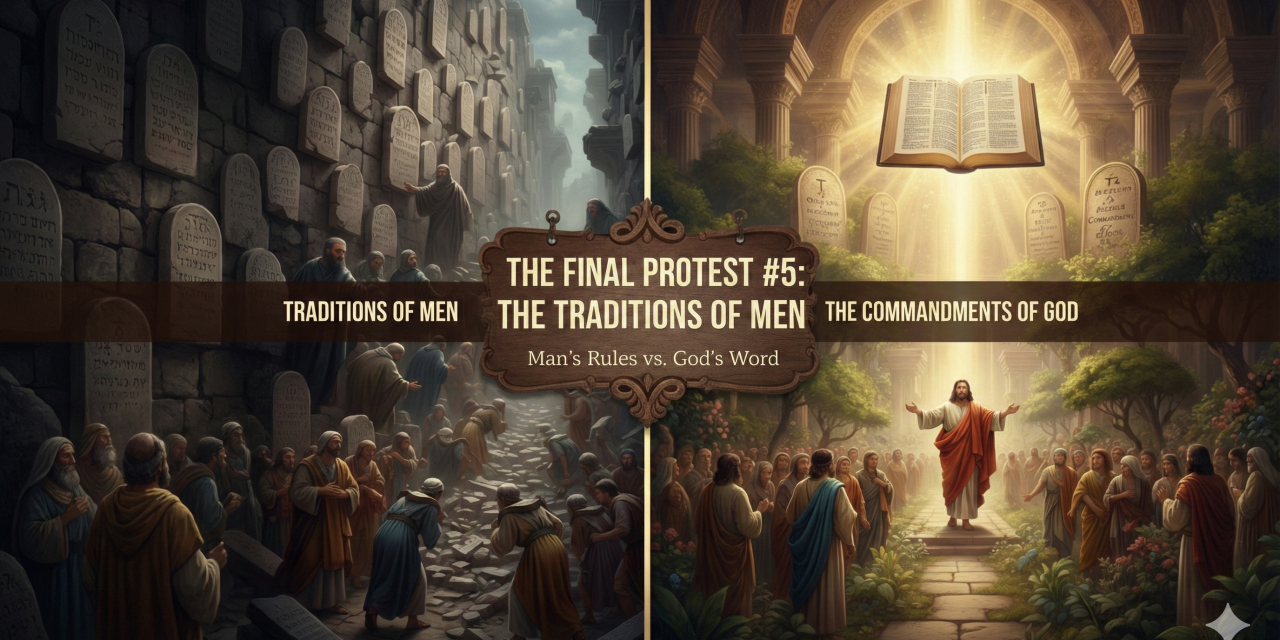
- Matthew 15:8-9 – Honoring God with lips but hearts far from Him; teaching commandments of men
On Unity in Truth:
- John 17:17 – “Sanctify them by Your truth. Your word is truth”
On Seeking God:
- Jeremiah 29:13 – “You will seek Me and find Me, when you search for Me with all your heart”
On Satan’s Deception:
- Revelation 12:9 – Satan deceiving the whole world
On the Mark of the Beast:
- Revelation 13:16-17 – The mark of the beast
- Revelation 14:9-12 – Warning against receiving the mark